Posted On August 25, 2025
Agile vs Waterfall: Choosing the Right Model for Your Software Project
When starting a software project, one of the first and most important decisions is choosing the right development approach. Two of the most widely used models are Agile and Waterfall. Both have their own advantages, challenges, and best-fit scenarios. Understanding the differences between them can help you decide which approach suits your project goals and team structure.
What is the Waterfall Model?
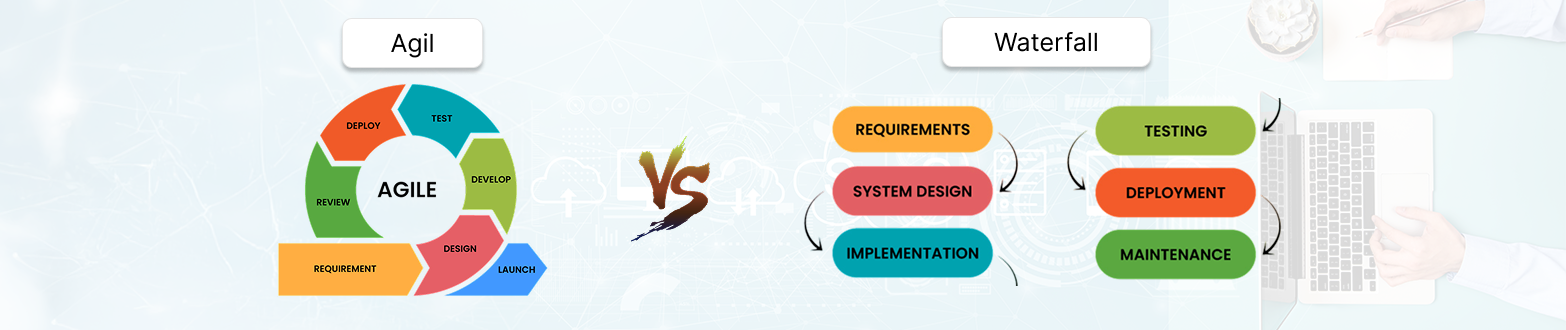
The Waterfall model is a traditional approach to software development where each stage flows into the next in a linear order. The process usually begins with requirements gathering, followed by design, development, testing, and finally deployment. Once a phase is completed, the project moves forward without revisiting the earlier stages.
This model works well when project requirements are fixed, clear, and unlikely to change. Industries such as construction, manufacturing, and large-scale government projects often use Waterfall because of its structured and predictable nature.
What is the Agile Model?
Agile takes a different approach. Instead of following a strict step-by-step process, Agile focuses on flexibility and collaboration. Projects are divided into smaller cycles known as “sprints.” Each sprint delivers a working version of the product, which can be tested and improved continuously.
This iterative process allows teams to adapt quickly to changes, refine priorities, and deliver value faster. Agile is widely used in software development, especially where customer needs and market conditions are constantly evolving.
Key Differences Between Agile and Waterfall
The main differences between Agile and Waterfall come down to structure, flexibility, and feedback:
-
Process Flow: Waterfall is linear and sequential, while Agile is iterative and adaptive.
-
Flexibility: Waterfall is rigid with minimal scope for change. Agile allows changes at almost any stage.
-
Delivery: Waterfall delivers the final product at the end, whereas Agile delivers smaller working versions throughout.
-
Customer Involvement: Waterfall requires minimal client interaction after requirements are set, while Agile keeps customers engaged at every step.
Advantages of the Waterfall Model
Despite being seen as less flexible, the Waterfall model offers several benefits:
-
Clear Structure: Each stage is well-defined and easy to follow.
-
Predictable Outcomes: Since everything is planned upfront, there is less uncertainty.
-
Good for Large Projects: Works best for projects with fixed budgets, timelines, and scope.
-
Detailed Documentation: Ensures every step is recorded for future reference.
For projects with stable requirements, Waterfall provides stability and control.
Advantages of the Agile Model
Agile has gained popularity because of its adaptability and focus on customer satisfaction. Its benefits include:
-
Flexibility: Easy to make changes based on new requirements or feedback.
-
Faster Delivery: Continuous releases mean quicker delivery of usable features.
-
High Customer Involvement: Encourages regular feedback and collaboration.
-
Improved Quality: Frequent testing ensures issues are detected early.
Agile works best for dynamic environments where customer needs evolve and innovation is a priority.
Flexibility and Adaptability in Project Development
One of the key differences between Agile and Waterfall lies in how adaptable they are. Agile is built around flexibility, allowing teams to adjust priorities, incorporate feedback, and make changes as the project moves forward. Waterfall, on the other hand, follows a fixed path where each stage must be completed before moving to the next. This makes Waterfall more rigid but suitable for projects with clear, unchanging requirements.
Cost, Time, and Resource Management
Agile often spreads costs over multiple development cycles, making it easier to manage budgets while adjusting to new needs. It also allows faster delivery of small, functional features, helping businesses see results sooner. Waterfall, however, usually requires upfront investment in time, resources, and planning. While this can prevent unexpected costs later, it also means the project may take longer to deliver if changes are requested midway.
Risk Assessment and Quality Assurance
Agile reduces risks by delivering work in small, testable parts. Regular testing and client feedback ensure issues are caught early, improving quality at every stage. In Waterfall, testing generally happens at the end of the development cycle, which can delay the discovery of problems. While this structured approach may work for projects with well-defined outcomes, it can create higher risks if requirements evolve.
Deciding Based on Team Size and Client Involvement
Team dynamics and client involvement often influence the choice between Agile and Waterfall. Agile works best with smaller, collaborative teams and clients who can stay engaged throughout the process. It thrives on regular communication and continuous input. Waterfall suits larger teams handling projects where client involvement is limited after the initial planning stage, making it ideal for projects with strict documentation and approval processes.
Making the Right Choice for Your Project
Choosing between Agile and Waterfall depends on your project’s goals, complexity, and flexibility. Agile is ideal if you need adaptability, regular updates, and quicker feature delivery. Waterfall may be the better choice if your project is highly structured, with clear requirements that are unlikely to change. The right model ensures efficiency, cost-effectiveness, and smoother execution.
Conclusion
Both Agile and Waterfall have their strengths, and the right choice depends on your project requirements, budget, and team capabilities. If your project has fixed goals and strict timelines, Waterfall may be the better choice. However, if flexibility, quick delivery, and customer feedback are essential, Agile is likely to be the best fit.
At smartdatainc.com, we help businesses choose the right software development approach based on their unique needs, ensuring efficiency, scalability, and long-term success.
Share on: