
Posted On January 12, 2026
Platformization at smartData: A Strategic Edge in the Enterprise Technology Era
Technology cycles change, and each decade offers a paradigm shift that distinguishes the age of service businesses and the age of market makers or disruptors. The current paradigm shift is “platformization,” not merely “software development” but “modular and reusable technology platforms that drive delivery faster and cheaper.”
The platform architecture is fast becoming the norm in various industries, as companies are slowly moving from being firewalled to being configurable-business architectures.
At smartData, platformization is right at the heart of our execution strategy and productized service offerings and is already transforming the way our clients are implementing software solutions, right from healthcare to enterprise SaaS software to AI-based intelligent systems.
Why Platformization Matters Now
Worldwide IT spending is undergoing a change in direction. Today, the focus is not on mere modernization, but on speed, efficiency, interoperability, and data analytics. This is because the classical linear approach takes too long, is too expensive, or is not cohesive in today’s era.
Platformization remedies the above difficulties:
- It prevents repetitive engineering.
- It speeds up time-to-market
- It decreases the rate of errors.
- It enhances maintainability and scalability.
Long-term business strategy, not ad-hoc scope, is where solutions need to align.
This is even more relevant in the current scenario where corporate buyers are under the pressure to prove ROI with immediacy and also create a strong competitive advantage. The future for AI technology and the infrastructure for automation solutions and SaaS also indicates a steady growth rate in demand rather than a decline.
The change is structural, not cyclical.
Why Platformization helps give smartData an Edge
smartData is certainly not approaching platformization in terms of conceptual construct – we have operationalized this process.
- Reusable POD Architecture
Our internal product components, known as Pods, lower the first build by 25% to 40%, enhance quality, and pave a secure, standards-compliant foundation. - Domain-Centric
We have also matured platform models over a number of industries, particularly in the healthcare space, that make it easy to quickly roll out systems that comply - Productized Service Model
Our model goes beyond effort pricing to the delivery of outcomes and capabilities themselves, which are driven by the value provided to the customer rather than the hours spent on the work.
These, together, improve differentiating factors for business, margins, and an ecosystem that is hard to replicate by traditional project-selling companies.
Applications in Industry Sectors
- Healthcare Platforms
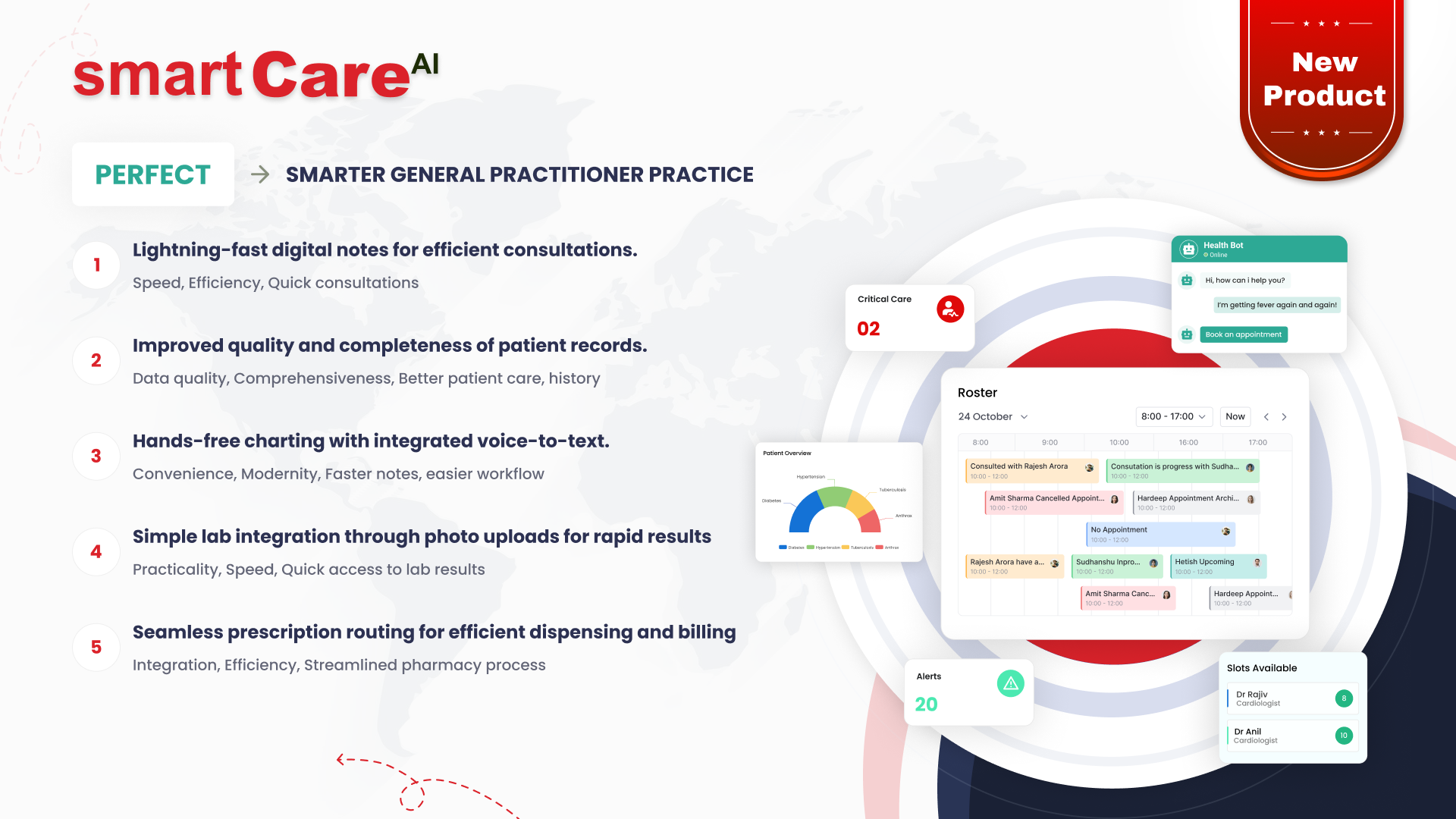
The healthcare sector is currently the most mature field regarding smartData’s platform and encompasses models and frameworks used for:- Electronic Health Records/Electronic
- Care management
- Risk forecasting
- FAX and voice automation
- Tele rehabilitation & tele monitoring
- Claims and billing processes
- HIPPA-ready document intelligence
These platforms comprise reusable APIs, identity modules, compliance libraries, interoperability structures, and models of data governance. All this leads to faster deployment, enhanced security, and scalability.
- Enterprise Software as a Service Platforms
In commercial SaaS, platformizing helps customers get their products out to market faster and enhance their products without any rebuild costs.Our frameworks are compatible with:
- Multi-tenant Architecture
- Subscriptions and Billing Engines
- Role-based dashboards
- Business Intelligence and analytics
- Automating a workflow
- Using audit trails
- Audit trails are records
- API Marketplaces
This layer of the platform enables enterprise customers to pivot from the Version 1 delivery to mass market success much faster.
- AI & Intelligent Automation Platforms
The use of AI is shifting from pilot to implementation.smart Data platforms facilitate the transition process with the following offerings:
- Agentic workflow orchestration
- Voice automation PODs
- Natural Language Processing and document intelligence
- Predictive analytics engines
- Enterprise Security and Audit Layers
- Model readiness: Integrated Data Pipelines
These platform assets enable clients to overcome the obstacle of pilot fatigue and implement AI where it really counts – within business systems.
Reasons why Platformization Fits with smartData’s Objectives
The Productized Service Model in smartData is based on four main business outcomes:
- Reusable IP that compounds value.
- Reliable delivery based on proven architecture.
- Reduce the Total Cost of Ownership for clients.
- Scalability of revenue via repeatability
Platformization is the engineering heartbeat that enables the vision. Platformization ushered the industry into the era of leveraging development capabilities instead of the customization art.
Rather than merely building products, smartData is building infrastructure that powers products.
Instead of “reinventing the wheel” every time, we are able to break down functionalities into pieces that are modular.
Instead, we offer acceleration, reliability, and Certainty instead of Hours.
“This shift is not incremental—it is strategic.”
How Platformization is Expected to Characterize the Future of IT Service Industry
Enterprise demand will continue to be increasing for:
- AI Integrated
- workflow automation
- interoperability
- governed data systems
- voice interfaces
- Voice
- intelligent analytics
The organizations will need a platform and not a point solution to cater to these requirements.
Just as cloud computing changed the face of infrastructure, platformization is now transforming applications.
Those firms that do not possess platform DNA will experience longer delivery lead times, reduced margins, and reduced business relevance. Firms that leverage platform ecosystems will grow faster, innovate, and develop better business relationships.
This is the focus that smartData is investing in before the curve.
Conclusion: Platformization Is the Future Operating Model
Platformization is no longer a trend. It is the future architecture standard for enterprise tech, particularly in the healthcare sector, SaaS, and AI automation.
Market noise may come and go. Or, at least, market noise related to the potential for cloud computing may come and go. Expectations may fluctuate. But the fundamental transformation towards scalable, modular, and smartData is poised not only to play a role in this paradigm shift but to help shape the future by offering platformed and productized solutions that simplify and accelerate the transformation of the enterprise. For their clients, platformization equals faster outcomes. For smartData, it means differentiation. It is a sign of what the future holds for the industry.
Share on: