Posted On January 3, 2026
How AI Is Reshaping the Future of EHR and Clinical Decision Support
What Are EHR and Clinical Decision Support Systems?
Electronic Health Records (EHR) are digital versions of patients’ medical histories, including diagnoses, medications, treatment plans, immunisation records, and test results. EHR systems replace traditional paper records with centralised, accessible data that healthcare providers can view and update in real time. These systems aim to improve the accuracy and completeness of health information, reduce errors, and support better communication among care teams.
Clinical Decision Support (CDS) systems, on the other hand, are tools designed to assist clinicians in making informed decisions. They provide evidence-based recommendations, alerts, and reminders based on patient data. CDS often integrates with EHRs to analyse real-time information and suggest next steps, such as potential diagnoses or appropriate medications. Together, EHR and CDS systems are central to modern healthcare delivery, helping providers make faster and more accurate decisions.
The Role of AI in Modern Healthcare
Artificial Intelligence (AI) is rapidly transforming many industries, and healthcare is no exception. AI refers to computer systems that can perform tasks that normally require human intelligence, such as pattern recognition, prediction, and decision-making. In healthcare, AI has the potential to enhance efficiency, accuracy, and outcomes by processing vast amounts of data quickly and identifying insights that may not be obvious to the human eye.
With rising patient volumes, complex medical information, and the need for timely decisions, clinicians can benefit from AI’s ability to analyse and prioritise relevant data. By supporting routine tasks and complex analytics, AI enables healthcare professionals to focus more on direct patient care rather than administrative burdens.
How AI Improves Electronic Health Records Accuracy
One of the key challenges in EHR management is ensuring the accuracy and consistency of patient data. Manual entry can lead to errors, omissions, and inconsistencies that compromise care quality. AI helps reduce these issues in multiple ways:
-
Automated data capture: AI can extract relevant information from documents and digital sources, reducing reliance on manual input.
-
Natural Language Processing (NLP): This technology interprets and converts clinical notes, lab reports, and other unstructured text into structured EHR data accurately.
-
Error detection: AI systems can flag potential discrepancies, such as conflicting medication lists or unlikely clinical values, prompting clinicians to review and correct data.
Improving EHR accuracy with AI not only saves time but also enhances the reliability of patient records, which is essential for safe and effective treatment.
AI-Driven Insights for Better Clinical Decisions
Clinical Decision Support systems become even more powerful when enhanced with AI. Traditional CDS tools rely on static rule-based logic, such as alerting providers when a patient’s lab result falls outside a normal range. AI takes this further by analysing patterns and trends across large datasets to deliver predictive and personalised recommendations.
Some ways AI enhances clinical decision-making include:
-
Risk prediction: AI can assess a patient’s likelihood of developing complications, allowing preventive interventions.
-
Diagnostic support: By comparing patient data with large medical datasets, AI can suggest potential diagnoses that a clinician might otherwise overlook.
-
Treatment optimisation: AI models can recommend the most effective treatment plans based on outcomes from similar patient profiles.
These insights assist clinicians in making more informed choices, improving patient outcomes and reducing the likelihood of avoidable errors.
Reducing Administrative Burdens With AI Tools
Healthcare providers spend a significant amount of time on administrative work such as documentation, billing, and compliance reporting. This administrative load can detract from time spent with patients and contribute to burnout. AI can streamline many of these functions:
-
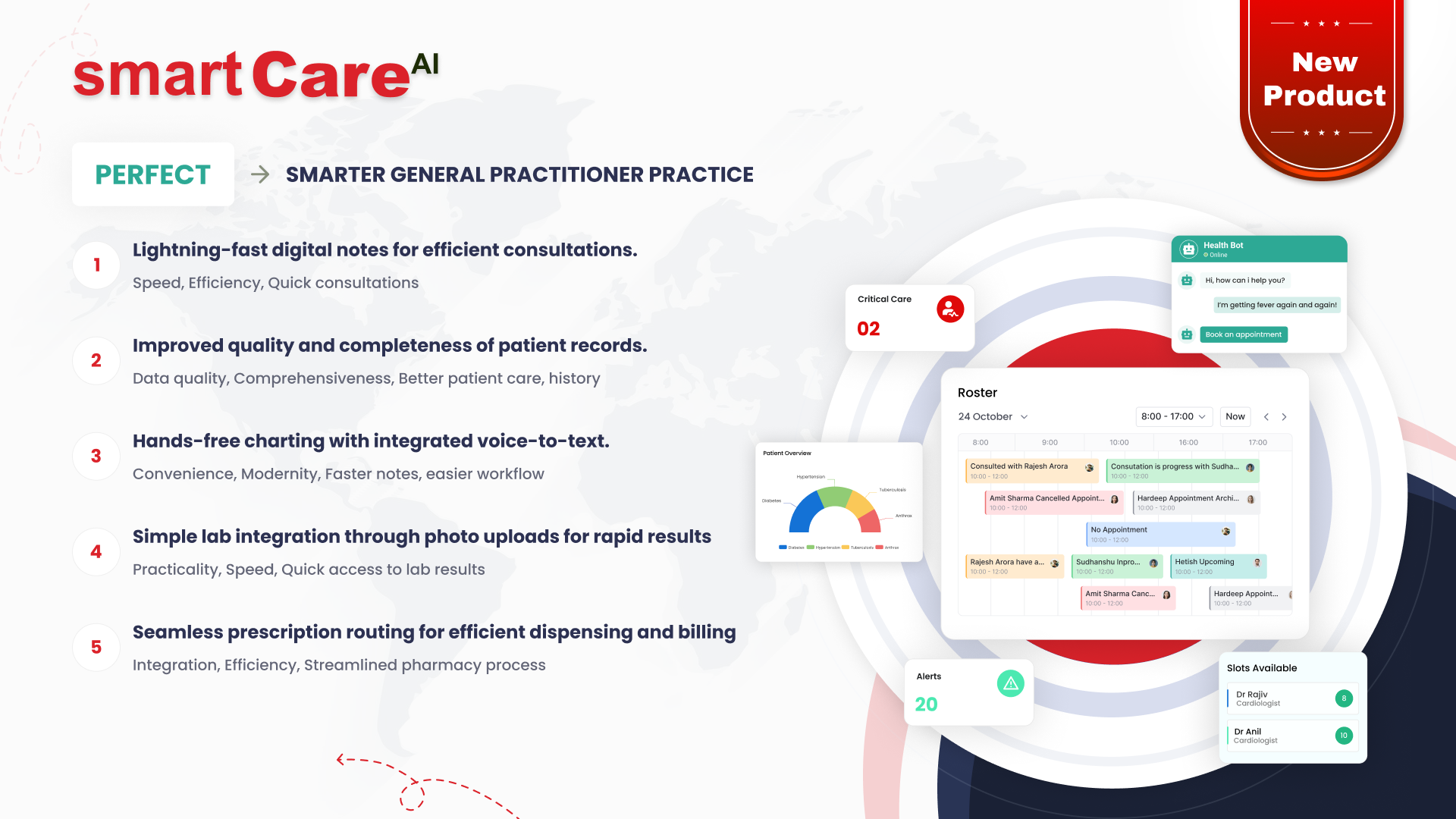
Automated documentation: Speech-to-text and smart summarisation tools can transcribe clinician-patient interactions and populate EHR fields accurately.
-
Coding assistance: AI can classify diagnoses and procedures for billing codes, reducing errors and accelerating claims processing.
-
Workflow optimisation: Intelligent scheduling and task prioritisation help ensure clinicians and support staff can manage their workload efficiently.
By automating repetitive and time-consuming tasks, AI supports smoother operations, reduces staff fatigue, and enables healthcare teams to focus more on clinical care.
Enhancing Patient Care Through Predictive Analytics
Artificial Intelligence has introduced powerful tools for predictive analytics in healthcare, helping clinicians anticipate medical events before they occur. By analysing large volumes of patient data from Electronic Health Records (EHR), AI algorithms can identify patterns that might signal potential risks. For example, predictive models can alert clinicians about patients at high risk of readmission or deterioration, allowing for early intervention.
This proactive approach enhances patient care by supporting timely decisions, improving outcomes, and reducing the likelihood of serious complications. As AI technology continues to evolve, predictive analytics will become an even more integral part of clinical workflows.
Safeguarding Patient Data in AI-Enabled Systems
Protecting patient information remains a top priority as AI tools become more prevalent in healthcare. Electronic Health Records contain sensitive personal and medical data, so any AI integration must meet strict privacy and security standards. Modern systems use encryption, access controls, and continuous monitoring to safeguard data against breaches.
AI can also support security by detecting unusual access patterns and alerting administrators to potential threats. With robust safeguards, healthcare providers can leverage the benefits of AI without compromising patient privacy or trust.
Real-World Examples of AI in EHR and Clinical Support
Several healthcare organisations are already using AI to enhance EHR systems and clinical decision support. For instance, some hospitals employ AI to assist in diagnosis by analysing imaging records and clinical notes to suggest possible conditions. Others use natural language processing tools to automatically summarise patient interactions, reducing the time clinicians spend on documentation.
These real-world applications demonstrate how AI improves efficiency, accuracy, and clinician satisfaction by streamlining routine tasks and helping providers make better-informed decisions based on comprehensive data.
Challenges in Adopting AI in Healthcare Settings
Despite its benefits, adopting AI in healthcare comes with challenges. Integrating AI tools with existing EHR systems often requires significant technical investment and expertise. There are also concerns about data quality, as AI systems rely on comprehensive and accurate records to produce trustworthy insights.
Clinicians may be hesitant to trust AI-generated recommendations without clear explanations of how conclusions are reached. To address these concerns, healthcare organisations must focus on training, transparency, and collaboration between clinical teams and technology experts.
Preparing Your Healthcare Practice for an AI-Powered Future
Healthcare practices looking to benefit from AI should start by evaluating current workflows and identifying areas where automation or decision support could add the most value. Investing in staff training ensures that clinicians feel confident using new tools and understand their capabilities.
Selecting AI solutions that seamlessly integrate with existing EHR systems and comply with regulatory requirements helps minimise disruption. Continuous evaluation and updates will ensure AI technologies support clinical goals as patient needs and technological possibilities change over time.
Conclusion
Artificial Intelligence is reshaping the future of Electronic Health Records and Clinical Decision Support by improving data accuracy, offering deeper clinical insights, and reducing administrative burdens. By integrating AI into these systems, healthcare providers can deliver more timely, reliable, and personalised care. As the role of AI in healthcare continues to grow, organisations need thoughtful strategies to leverage its potential effectively. For expert guidance on implementing AI-enabled healthcare solutions that support EHR and clinical decision workflows, visit https://smartdatainc.com/.
Share on: