Posted On December 19, 2025
How Computer Vision Is Being Used in Retail, Healthcare & Security
Computer vision is changing the way businesses and organisations understand visual data. By enabling machines to interpret images and videos, this technology helps automate processes, improve accuracy, and support better decision-making. Today, retail, healthcare, and security are among the sectors seeing the strongest impact from computer vision solutions.
Understanding Computer Vision and Its Core Capabilities
Computer vision is a branch of artificial intelligence that allows systems to analyse visual information from the real world. It can identify objects, recognise patterns, track movement, and detect anomalies in images or video streams. These capabilities are powered by machine learning models that learn from large volumes of visual data. As computing power has improved, computer vision systems have become faster, more accurate, and easier to integrate into everyday operations.
Why Computer Vision Is Gaining Attention Across Industries
Organisations are increasingly adopting computer vision because it helps reduce manual effort while improving efficiency and reliability. Tasks that once required constant human monitoring can now be handled automatically, often in real time. Computer vision also supports better consistency, as machines do not tire or overlook details. As a result, industries are using this technology to cut costs, improve safety, and gain clearer insights from visual information.
Improving Customer Experience in Retail with Visual Intelligence
In the retail sector, computer vision is helping businesses better understand customer behaviour. Cameras and vision-based systems can analyse foot traffic, monitor how customers move through a store, and identify which displays attract the most attention. These insights help retailers optimise store layouts, reduce waiting times, and offer a more personalised shopping experience. Visual intelligence also supports cashier-less checkout systems, making the buying process faster and more convenient for customers.
Smart Inventory and Shelf Management in Retail
Computer vision is also improving how retailers manage inventory. Vision systems can monitor shelves to detect out-of-stock items, misplaced products, or pricing errors. This allows staff to respond quickly and keep shelves well organised. Automated inventory checks reduce errors and save time compared to manual counting. As a result, retailers can maintain better stock levels and avoid lost sales due to unavailable products.
Enhancing Medical Imaging and Diagnosis in Healthcare
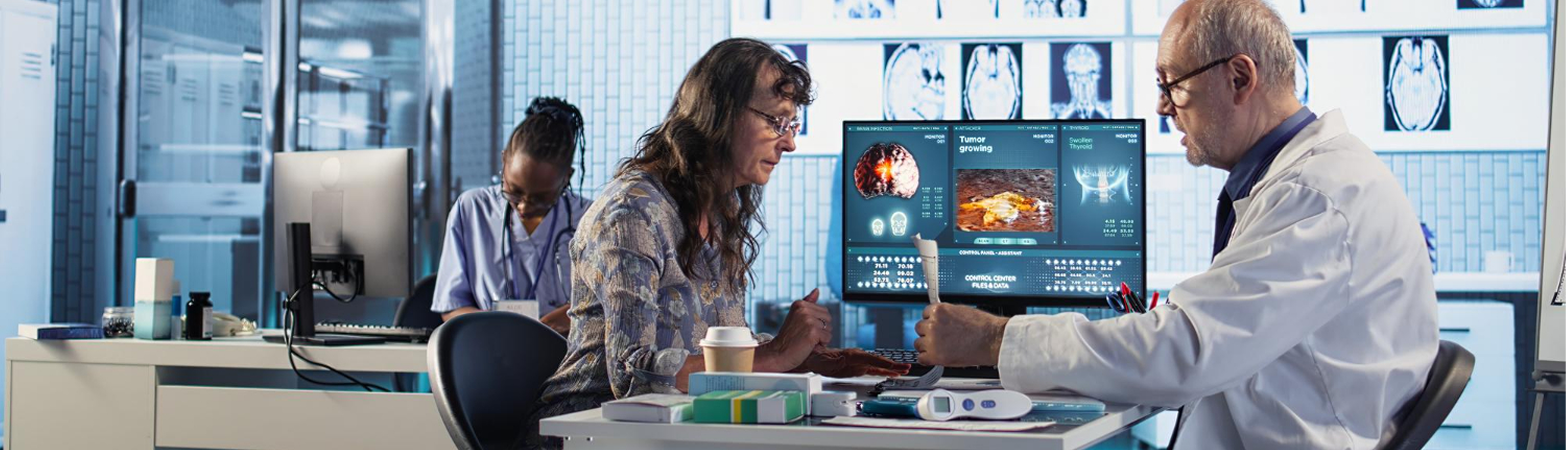
In healthcare, computer vision plays a vital role in analysing medical images such as X-rays, CT scans, and MRIs. These systems help medical professionals detect conditions earlier and with greater accuracy. Computer vision can highlight areas of concern, support diagnosis, and reduce the chances of human error. By assisting doctors rather than replacing them, this technology improves efficiency while allowing healthcare providers to focus more on patient care.
Supporting Patient Monitoring and Care Through Vision-Based Systems
In healthcare settings, computer vision supports patient care beyond diagnosis. Vision-based monitoring systems can track patient movement, posture, and activity without the need for physical contact. This is particularly useful for elderly care, rehabilitation, and hospital wards.
These systems help detect falls, monitor recovery progress, and ensure patients follow prescribed movements. By providing continuous observation, healthcare teams can respond faster to potential issues while reducing the workload on staff.
Strengthening Security with Real-Time Video Analysis
Security operations rely heavily on surveillance footage, but manual monitoring is time-consuming and prone to error. Computer vision enables real-time video analysis, allowing systems to identify unusual behaviour, unauthorised access, or potential threats as they occur.
This technology is widely used in public spaces, offices, and transport hubs. Automated alerts help security teams act quickly, improving safety while reducing dependence on constant human supervision.
Preventing Fraud and Improving Surveillance Accuracy
Computer vision also plays an important role in fraud prevention. Facial recognition, object detection, and behaviour analysis help identify suspicious activities in retail stores, banks, and secure facilities.
By analysing visual patterns, systems can reduce false alarms and focus attention on genuine risks. This leads to more accurate surveillance and better use of security resources, while maintaining consistent monitoring across large areas.
Addressing Privacy and Ethical Considerations
As computer vision becomes more common, privacy and ethics must be carefully managed. Organisations need to ensure that data collection follows local regulations and respects individual rights. Transparent policies, secure data handling, and responsible use of visual data are essential.
Balancing innovation with trust is critical. When implemented correctly, computer vision can deliver benefits without compromising privacy or public confidence.
The Future of Computer Vision Applications
The future of computer vision lies in smarter, more context-aware systems. Advances in artificial intelligence will allow solutions to adapt to changing environments and deliver deeper insights across industries.
In retail, healthcare, and security, computer vision will continue to support safer operations, better service delivery, and more informed decision-making. As the technology matures, its impact will become even more integrated into everyday business processes.
Conclusion
Computer vision is proving to be a valuable technology across retail, healthcare, and security by turning visual data into practical insights. From improving customer experiences and inventory management to supporting medical diagnosis and enhancing safety, its applications continue to expand. As organisations look for smarter and more reliable digital solutions, computer vision will remain a key part of modern technology strategies. To explore how advanced technologies can support your business goals, visit https://smartdatainc.com/.
Share on: