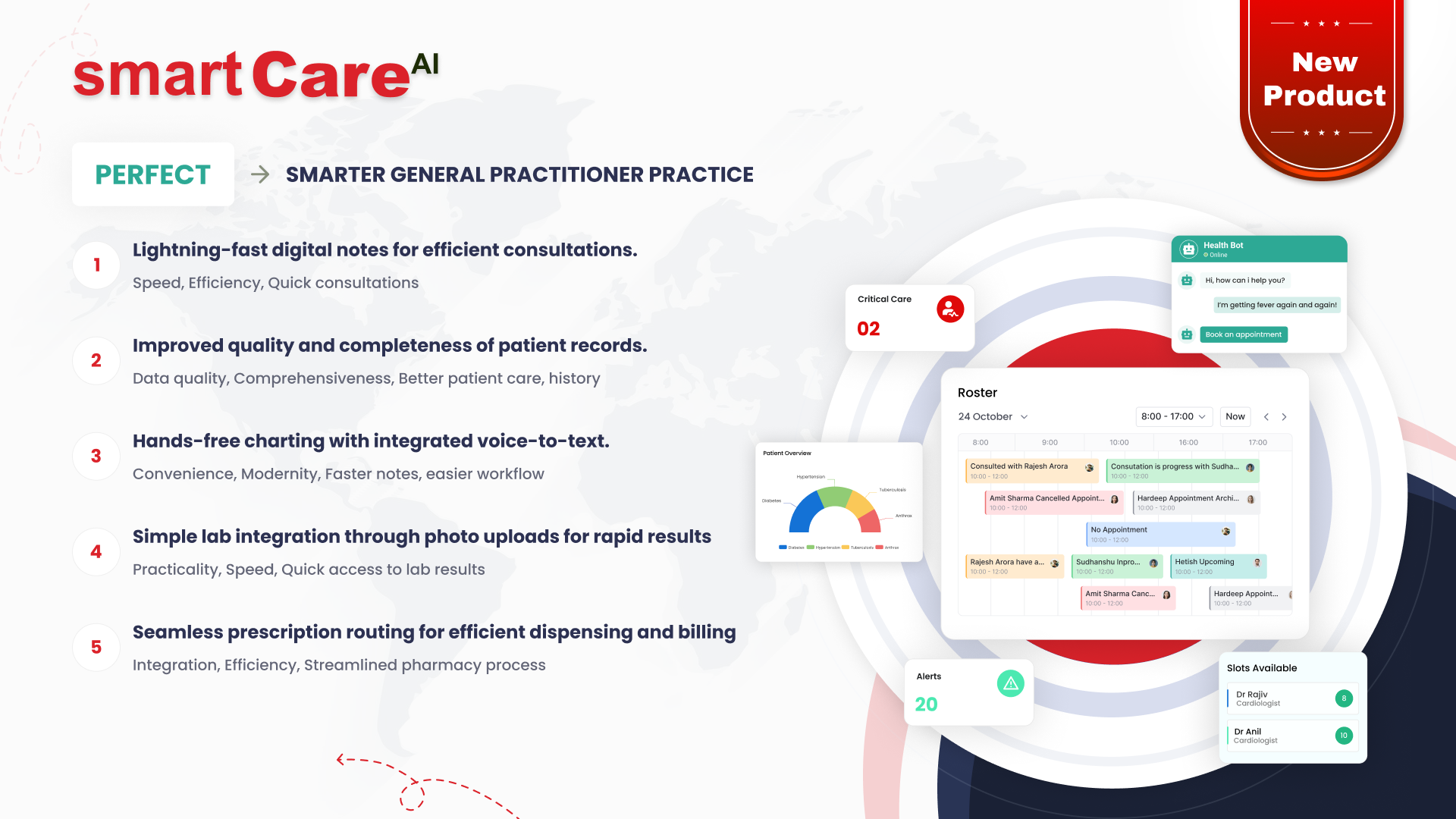
AI is transforming healthcare through predictive diagnostics, personal care to the patient, and simplification of administrative procedures. But careful planning and budgeting are involved when trying to implement AI in healthcare software. Costs vary according to complexity, data integration needs, adherence to health-care-related regulations such as HIPAA, and scalability of the solution.
The investment in building AI-driven healthcare software requires skilled developers, robust data infrastructure, and maintenance. Integrating AI with an existing EHR or telemedicine platform adds to the cost.
At smartData, we cater to scalable, secure, and cost-effective AI-driven solutions in healthcare, ranging from predictive analytics to better outcomes in patients to AI-based administrative tools to reduce overheads.
Integrating AI into enterprise software applications can revolutionize operations, enhance decision-making, and deliver personalized user experiences. However, successful integration requires strategic planning and a clear understanding of business goals.
Begin with understanding the problems AI can specifically solve: process automation, predictive analytics, or maybe customer engagement. Next, your data infrastructure has to be strong and safe; it is, in a way, the foundation for success in using AI. Scalability: your AI solution has to grow along with your business.
Most notably, especially in healthcare-related areas, adherence to industry compliance is paramount. Responsible use of AI involves ethical issues, including decision transparency.
At smartDta we bring tailored AI solutions to fit enterprise-level systems. We design applications scalable, secure, and compliant to deliver tangible business value from health care through finance.
Integrating Internet of Things (IoT) devices with Electronic Health Records (EHR) systems has the potential to revolutionise healthcare delivery by providing real-time data, improving patient care, and streamlining processes. However, the integration of these advanced technologies often comes with hidden costs that many healthcare providers overlook. In this blog, we will explore the various hidden costs associated with IoT integration into EHR systems.
Integrating IoT devices with EHR systems is not just about purchasing the devices and linking them to an existing EHR platform. It involves a significant investment in software, hardware, and infrastructure. From custom integrations and API developments to the cost of upgrading legacy EHR systems to support IoT devices, the hidden costs can be substantial. These include ongoing system monitoring and ensuring the EHR platform’s scalability to accommodate the vast amount of data being generated by IoT devices. While the integration promises long-term benefits, it often requires a substantial upfront investment.
While IoT devices can improve patient care and healthcare facility operations, they also contribute to increased operational costs. For instance, the implementation of IoT can create a need for additional personnel to monitor and manage the constant data flow from devices. This can lead to increased staffing costs, especially for IT professionals and data analysts. Furthermore, healthcare facilities may need to invest in additional server capacity or cloud storage to handle the large volumes of data generated by IoT devices. These hidden operational expenses can easily go unnoticed during the initial planning phase.
Security and maintenance are critical aspects of healthcare technology. With IoT devices integrated into EHR systems, healthcare organisations face an increased risk of cyberattacks and data breaches. Each IoT device connected to an EHR system creates an additional entry point for hackers. As a result, healthcare providers need to invest in robust security protocols and regular system updates to protect sensitive patient data. These cybersecurity measures often come with hidden costs, including the need for specialised security software, vulnerability assessments, and ongoing training for IT staff. Additionally, routine maintenance costs for IoT devices and EHR systems can accumulate over time.
IoT devices generate vast amounts of data that need to be stored securely. As EHR systems are designed to hold patient records, integrating IoT devices adds a new dimension to data storage requirements. The financial burden of storing this data can be substantial, especially as the volume increases over time. Healthcare organisations may need to invest in more storage capacity, whether on-site or via the cloud, and ensure that their data management systems can handle the large-scale storage and retrieval of IoT data. These hidden costs of IoT data storage are often underestimated but play a significant role in the overall cost of integration.
The successful integration of IoT devices into EHR systems requires healthcare staff to adapt to new technologies and workflows. The costs associated with training healthcare professionals on how to use and manage IoT-integrated EHR systems can be significant. Training programmes need to be comprehensive and ongoing to ensure that all staff are proficient in using the new system and understand the implications of IoT data in their decision-making processes. Additionally, there may be indirect costs, such as potential downtime during training sessions or the need for temporary staff to cover shifts. The investment in staff training and education is a crucial factor that healthcare organisations must consider when integrating IoT with EHR systems.
When IoT devices are introduced into an EHR system, maintaining long-term compatibility becomes a significant concern. IoT devices need to communicate seamlessly with various healthcare systems, which can lead to ongoing expenses. Ensuring that the software updates for both IoT devices and EHR platforms are compatible with one another can incur substantial costs. Moreover, as new versions of devices or software are released, additional integration efforts may be required to keep the system functioning smoothly. These upgrades, while necessary for optimal performance, add up over time and should be factored into the long-term cost projections for healthcare facilities.
Integrating IoT devices with EHR systems often necessitates upgrading existing software and hardware infrastructure. These upgrades can lead to system downtime, impacting operations and, in turn, the bottom line. Scheduled downtime for upgrading EHR systems to integrate with IoT devices can lead to reduced productivity, delayed patient care, and frustrated staff. Additionally, unanticipated downtimes can occur when unforeseen compatibility issues arise. During these periods, the healthcare organisation may incur costs related to lost revenue and operational inefficiencies, which must be factored into the overall integration cost.
IoT devices must be able to share data with other healthcare systems, such as laboratory systems, radiology equipment, and pharmacy management systems, to provide a full picture of a patient’s health. However, IoT-driven interoperability presents a significant challenge. Many IoT devices use different protocols or data formats, which may not always be compatible with existing EHR systems. Resolving these interoperability issues often requires additional development work, custom software solutions, or third-party tools. These costs can be substantial, especially when multiple devices are integrated across a large healthcare network. Ensuring smooth communication across various systems is essential for patient safety and operational efficiency, but it comes at a cost.
One of the most significant hidden costs of integrating IoT with EHR systems is the ongoing management of IoT devices. These devices require regular monitoring, maintenance, and support to ensure they operate efficiently and securely. Healthcare organisations must invest in dedicated personnel or third-party service providers to manage these devices and ensure they are functioning correctly. This can be a significant ongoing expense, as devices need to be regularly calibrated, updated, and occasionally repaired or replaced. Additionally, as IoT devices accumulate, the complexity of their management increases, leading to more time and resources being spent on maintaining the system.
Healthcare is one of the most highly regulated industries, with stringent laws governing the privacy and security of patient data. The integration of IoT devices with EHR systems introduces additional compliance challenges. IoT devices must meet the same rigorous standards as EHR systems when it comes to data security and patient privacy. Compliance with regulations like the General Data Protection Regulation (GDPR), the Health Insurance Portability and Accountability Act (HIPAA), and other regional standards can result in additional costs. These may include costs related to audits, security enhancements, legal consultations, and training staff on new compliance requirements. Failing to meet these regulations can result in fines and reputational damage, making compliance a significant cost consideration in the integration process.
While integrating IoT with EHR systems offers undeniable benefits in terms of improved patient care, efficiency, and operational performance, it also comes with a range of hidden costs that healthcare providers must carefully consider. These costs include initial integration expenses, increased operational costs, security and maintenance challenges, data storage requirements, and the need for staff training. By understanding and preparing for these hidden costs, healthcare organisations can make more informed decisions and ensure that the integration of IoT and EHR systems is both effective and sustainable in the long term.
At Smart Data Inc., we help healthcare providers navigate the complexities of IoT integration with EHR systems. Our team of experts can guide you through the entire process, from cost estimation and system integration to training and ongoing support. By understanding the financial and operational implications of IoT and EHR integration, we ensure that your investment delivers lasting value.
Visit smartdatainc.com to learn more about how we can help you optimise your healthcare technology solutions.
Navigating regulatory compliance in healthcare software development is a critical yet challenging task due to the sensitive nature of patient data and the strict regulations governing its use. Frameworks like HIPAA (Health Insurance Portability and Accountability Act) in the U.S., GDPR (General Data Protection Regulation) in the EU, and FDA US Food and Drug Administration ( guidelines for medical devices require developers to adhere to rigorous standards of privacy, security, and accuracy. Failure to comply can lead to severe penalties, reputational damage, and compromised patient safety. To address these challenges, healthcare software teams must adopt a proactive and structured approach. Understanding the specific regulatory requirements that apply to the software—whether for data handling, interoperability, or device integration—is the first step. This requires collaboration with the software consultants, legal experts and compliance consultants to ensure a thorough interpretation of the laws.
Integrating compliance into the software development lifecycle (SDLC) is essential. Regular risk assessments and vulnerability testing are crucial to identifying and mitigating potential security threats. Additionally, adopting frameworks such as ISO 13485 for medical devices or SOC 2 for data security can help streamline compliance efforts. Maintaining detailed documentation throughout the development process is also vital for regulatory audits. Training development teams, organization team members and vendors on regulatory standards and fostering a culture of compliance ensures that all stakeholders stay updated on evolving laws. Partnering with third party compliance experts or using compliance management tools can further enhance efficiency. By embedding compliance into every stage of development, healthcare software providers can build solutions that not only meet regulatory standards but also gain the trust of users and regulators alike.
At smartData we incorporate secure coding practices, data encryption, and access control measures during development. We are also helping organizations comply with the ever-evolving regulatory framework. Our expertise spans a wide range of regulatory standards, including HIPAA, GDPR, FDA, CCDA, HL7, FHIR, PIPEDA, and SNOMED. This ensures healthcare organizations not only meet regulatory requirements but also maintain a high standard of care for both government-sponsored plans and private payers. Our services include CCDA/HL7/QRDA/EDI file parsing, streamlining data reporting and submission processes, assessing systems for compliance gaps, and recommending tailored solutions. We have developed secure, compliant software platforms with robust data encryption and interoperability standards (e.g., HL7, FHIR). Regular audits, automation tools, and ongoing updates ensure streamlined compliance and alignment with evolving regulations.
In today’s technology-driven business environment, enterprise software projects play a vital role in improving operational efficiency, customer experience, and overall business growth. However, as companies adopt and integrate new technologies, they must adhere to various regulatory and compliance standards related to data privacy, security, industry practices, and more. Failing to comply with these regulations can result in severe financial, operational, and reputational risks. This article highlights the potential cost implications of non-compliance in enterprise software projects using examples from different sectors.
Digital commerce platforms handle vast amounts of sensitive customer information, such as payment details, personal data, and browsing behavior. Regulations like the GDPR (General Data Protection Regulation) in the EU and the CCPA (California Consumer Privacy Act) in the US set strict rules regarding data handling, storage, and consent. Non-compliance with these regulations can result in significant penalties and long-term reputational damage.
Potential Consequences:
Supply chain management software integrates various systems and stakeholders, including suppliers, distributors, and regulatory bodies. Non-compliance with industry regulations (e.g., FDA’s Good Manufacturing Practices for the food and drug industry or environmental regulations) can result in fines, delays, and increased operational costs.
Potential Consequences:
An asset management system helps companies track, manage, and optimize their assets, such as machinery, equipment, and vehicles. Non-compliance with regulations related to financial reporting, tax laws, or environmental standards can have significant consequences, especially when managing high-value or regulated assets.
Potential Consequences:
Restaurant reservation systems and point-of-sale (POS) platforms store sensitive customer information, including payment details and booking histories. Non-compliance with data protection laws, such as PCI DSS (Payment Card Industry Data Security Standard) or GDPR, can result in serious financial and reputational consequences.
Potential Consequences:
Business automation solutions streamline workflows across different departments, improving efficiency. These systems must comply with various industry standards, data privacy regulations, and security protocols. Failure to do so can lead to serious financial and operational issues, especially in highly regulated industries such as finance or healthcare.
Potential Consequences:
Non-compliance in enterprise software projects can have severe financial, legal, and operational consequences. The costs associated with non-compliance—whether in terms of fines, reputational damage, or disrupted business operations—can be crippling for any organization. Companies must prioritize compliance to avoid unnecessary risks and safeguard their financial stability.
By ensuring that software systems and platforms are built and operated in accordance with relevant regulations, businesses can protect themselves from costly penalties and reputational harm. Addressing compliance proactively is not just about avoiding penalties; it is an essential part of building trust with customers, partners, and regulatory bodies, and safeguarding long-term success.
With ever increasing patient volume, complex data management needs and growing emphasis on interconnected systems, developing healthcare software solutions is becoming challenging with each passing day. For practices and hospitals experiencing growth outdated software systems can become bottlenecks. Thus building scalable healthcare software solutions is necessity.
Here are some of the things one must consider while developing scalable healthcare solutions
A modular architecture allows you to add or remove features as and when needed without disrupting the existing system. This adds to scalability because you can easily add new modules for Telehealth, patient portal or specialised departments based upon the organization needs. This also simplifies updates and maintenance of the existing application since downtime required for maintenance would be less resulting in reduced costs.
Cloud based solutions offer inherent scalability since you can easily scale up or down based upon the demand. Cloud providers like AWS, Google, Azure offers robust infrastructure, security and disaster recovery options reducing the burden on IT teams and ensuring the business continuity remains.
Modern healthcare applications deal with a massive influx of data, from patient histories and lab results to billing and administrative information—the specifics depend on the application itself. Any effective solution needs to manage this volume efficiently. Just as crucial is interoperability: the ability to seamlessly share data with other systems. Adhering to established standards like FHIR or HL7 ensures smooth data exchange across different platforms.
As the user base and the overall data grows in the application, it must be able to handle it without degrading the performance. For this purpose careful consideration must be given to database design, overall system architecture, code optimisation and load testing. Regular performance monitoring and taking proactive maintenance steps are essential to identify and address potential bottlenecks.
Healthcare data is highly sensitive in nature and subject to strict compliance like HIPAA. Scalable solutions must prioritise security at every level like from data encryption to access controls to regular security audits and vulnerability assessments. Ensuring that the solution meets regulatory compliance is paramount to patient data privacy and avoiding costly penalties.
Scalability isn’t just about technical infrastructure it’s also about how user centric design the application has. A user friendly design which is intuitive and efficient is essential for maximising the adoption and productivity.
Building scalable healthcare applications is today’s need. By focusing on modular architecture, cloud based infrastructure, data management & interoperability, performance & reliability, security & compliance and user centric designs organisations can create applications that can adapt to their evolving needs.
Why Custom Enterprise Software Fits Well to Complex Business Needs? In the competitive landscape of business, organizations have unique and complex challenges that cannot often be met by packaged software solutions. Such needs can be highly specific, and custom enterprise software provides a tailored solution with many advantages that can greatly improve business performance.
In conclusion, custom enterprise software provides a strategic advantage for businesses with complex needs. By offering tailored solutions that enhance flexibility, scalability, integration, security, and cost efficiency, custom software empowers companies to achieve their goals and stay ahead in a competitive market.
Ensuring regulatory compliance is key when developing healthcare software projects. It shows a healthcare organization’s dedication to high standards of quality, safety, privacy, and security. Regulations cover important areas like data protection and patient care, and non-compliance can lead to heavy fines and legal action. Here’s a comprehensive checklist for ensuring regulatory compliance throughout lifecycle of healthcare software projects:
Initial Planning:
Design Architecture:
Development Phase:
Pre-Deployment-
Conduct third-party audits, regulatory submissions (e.g., CDSCO, FDA, CE marking), and end-user training. Develop contingency plans like disaster recovery.
Deployment:
Ensure the software is hosted in a secure environment, keep an eye out for any security breaches, and make sure backups are encrypted. Get the final approval from all relevant stakeholders.
Post-Deployment:
Monitor for vulnerabilities, perform regular audits, and address any incidents. Stay updated on regulatory changes and train your team to maintain compliance.
Ongoing Maintenance
Stay informed about regulatory updates and apply them promptly.
Provide continuous training to keep your teams updated on new regulations and security risks.
Maintain records of software updates to ensure all versions comply with regulations.
By following these checklists, we can reduce the risk of non-compliance, avoid penalties, and ensure the delivery of healthcare software that meets both legal and ethical standards.
What truly lies behind staying ahead in today’s dynamic business world is making fast, smart decisions. In efforts to keep up with the complexity of business operations, businesses have found a new normal in enterprise software, only to fall short of matching the traditional methods used by making decisions. That’s where predictive analytics comes into play, powered by some of the most cutting-edge machine learning (ML) and artificial intelligence (AI). It transforms all that data into actionable insights to guide businesses to make more accurate proactive decisions.
Predictive analytics takes the past and the present data and converts it into future predictions. For companies, this would transition from reaction to prevention of problems. Let’s take, for example, customer relationship management systems. Predictive models can detect customers who may leave or products that a customer might buy. This way, teams can react earlier and make more informed, future-focused decisions.
Enterprise software usually supports the key tasks across the supply chain, finance, and HR. Predictive analytics makes such systems even more effective by pointing out likely problems and providing the best available recommendations on how to invest resources. For example, the supply chain can use predictive models to analyze how past demand and other elements such as weather might affect the stock levels. This way, businesses will not overstock or run out of products due to time and money wastage.
Each business does have some risks, but to predict them makes a significant difference. Predictive analytics can flag the issues even before they spin out of control. For instance, financial software might flag unusual transactions that might have fraud written across them. Predictive tools in project management can even identify tasks likely to lag, so teams can catch up and prevent delays. Through this approach of staying ahead, businesses can secure their resources and reputation.
Today’s customers expect tailored experiences, and predictive analytics makes that possible. Predictive analytics can help a business make tailored recommendations and campaigns based on customer behavior, preferences, and purchase history. For instance, an e-commerce website can suggest to a customer what he might love to buy, hence increasing satisfaction and sales.
Proper long-term planning is the only way through which business success is achieved. Predictive analytics enables leaders to make better strategic decisions by simulating various scenarios. For example, enterprise resource planning systems that have predictive capabilities can evaluate the outcomes of various strategies. This helps businesses plan properly and adapt to changes in the market.
The biggest advantage of predictive analytics is that it can function in real time. Enterprise application software, even the modern generation, can process live data feeds. It makes decisions for the business right when they happen. In manufacturing, for example, predictive maintenance could be set up to detect potential problems in machines that may be causing downtime before happening.
Predictive analytics is just about to take off. When technology becomes even more advanced, as it will with the Internet of Things and big data, its power will increase dramatically. Businesses that embrace predictive analytics will have a huge competitive advantage: they will be nimbler, more efficient, and more customer-focused.
At smartData Enterprises, we are passionate about unlocking the power of predictive analytics for businesses. We specialize in creating customized solutions that turn data into smart decisions. Through the integration of predictive analytics with enterprise software, we help businesses not just survive but thrive in today’s competitive landscape.
Telemedicine & Virtual Care Platform
As technology continues to expand rapidly, Electronic Health Records (EHRs) are evolving with new features, including telemedicine, real-time data monitoring, and remote patient monitoring. These advancements help patients with chronic diseases avoid frequent visits to clinics or hospitals for data capture and consultations.
IoT Integration
IoT and wearable devices are enabling patients to monitor their vitals more efficiently while securely sharing data among healthcare providers. This technology also facilitates accurate fall detection, enhancing patient safety.
Natural Language Processing (NLP)
NLP features are improving the accuracy of EHRs by ensuring electronic records are correctly maintained. Additionally, they enable the migration of old paper-based records to electronic systems. This helps enhance care coordination and supports better decision-making based on digital data.
AI Bots
AI-powered chatbots are enabling virtual health consultations and symptom checks. These bots can handle basic health-related questions, reducing the administrative burden on healthcare professionals and allowing them to focus on more complex tasks.
Predictive Analytics
Predictive analytics is empowering healthcare providers to forecast patient health outcomes based on historical data. By identifying patterns, this technology allows for early intervention in potential health concerns. It can also detect early signs of chronic diseases, readmissions, and enable proactive care for patients.
AI-Driven Diagnostics & Clinical Decision Support
AI is assisting healthcare systems in analyzing medical images for quicker and more accurate diagnoses. Clinical decision support systems help healthcare providers make informed decisions, offering more personalized care to patients.
Cloud-based healthcare software solutions have significantly transformed patient data management by enhancing accessibility, security, and collaboration. These platforms enable real-time access to patient records from any location, improving the coordination between healthcare providers and reducing delays in treatment. Cloud technology also supports scalable storage, allowing healthcare institutions to manage large volumes of data efficiently without the constraints of physical infrastructure. Following are the major benefits for cloud-based healthcare solutions.